When to use “which” and when to use “that” hound me. And maybe you too. Here is the rule. Good luck.
The rule of thumb, then, is that which clauses are nonrestrictive (nonessential)while that clauses are restrictive (essential). Nonrestrictive clauses and phrases are set off from the rest of a sentence by a pair of commas (as in our examples above) or by a single comma if they come at the end of the sentence. (Example: “I took a vacation day on my birthday, which happened to fall on a Monday this year.”)
Merriam-Webster’s Collegiate Dictionary (10th edition), regarded by most writers as the authority on such matters, tells us that it is now common for which to be used with either kind of clause, while that must be used only for restrictive clauses. In fact, though, careful writers continue to make the distinction we describe above. Attorneys are taught to use which for nonrestrictive clauses and that for restrictive clauses so as not to cause a misreading in legal documents. It seems just as important that we work to avoid misreadings in all writing, not only in situations when a legal ruling might be at stake.
Tag: grammar
Gruntled
Are you gruntled today?
Obviously dislike is the opposite of like and disrespect is lack of respect. So when is this prefix not the negative and why? I didn’t know, so I researched it. The result was interesting.
From John Carlson: I have, for some time, been fascinated by the word disgruntled. How may you be disgruntled if you are not already gruntled? I do not know what gruntled is and I have not been able to find that word in the dictionaries that I have examined. Any thoughts about gruntled and disgruntled?
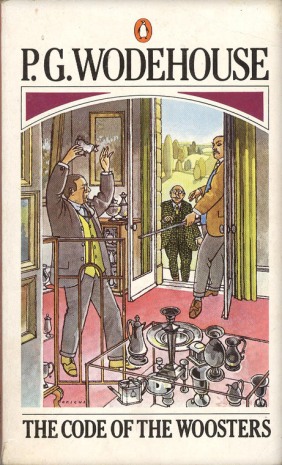
Years ago I wrote a piece about such unpaired opposites, whose first example was this word. It quoted P G Wodehouse’s The Code of the Woosters, published in 1938: “He spoke with a certain what-is-it in his voice, and I could see that, if not actually disgruntled, he was far from being gruntled.” So, if you were the opposite of disgruntled you would be pleased, satisfied, and contented.
Wodehouse invented this sense and has been quoted or flatteringly imitated many times since (as in Men at Arms by Terry Pratchett: “‘No, that man,’ said Angua, ‘[with a] face like someone very disgruntled.’ ‘Oh, that was Captain Vimes. But he’s never been gruntled, I think.’”)
The assumption behind it is that putting dis- on the front of a word makes it negative in meaning in some way, as in disappear, discontent, disconnect, dishonest, and dozens of others. That’s still an active way of making new words — it has been used in recent decades to create disinformation, disambiguate and many others. Sometimes, however — very rarely and only in old words — dis- is what the grammarians call an intensifier: it makes an existing sense stronger. For example, the unusual word disannul was used in the sense “to make null and void, bring to nothing, abolish” and dissever means “to divide, separate, disjoin.” A third example is disgruntle, which at root suggests somebody is more than merely gruntled. But gruntled here doesn’t have its Wodehousian sense, quite the reverse.
 David Gersh